Your Compliance Training Is Costing You Money
Every week it doesn't match reality
August 10, 2026
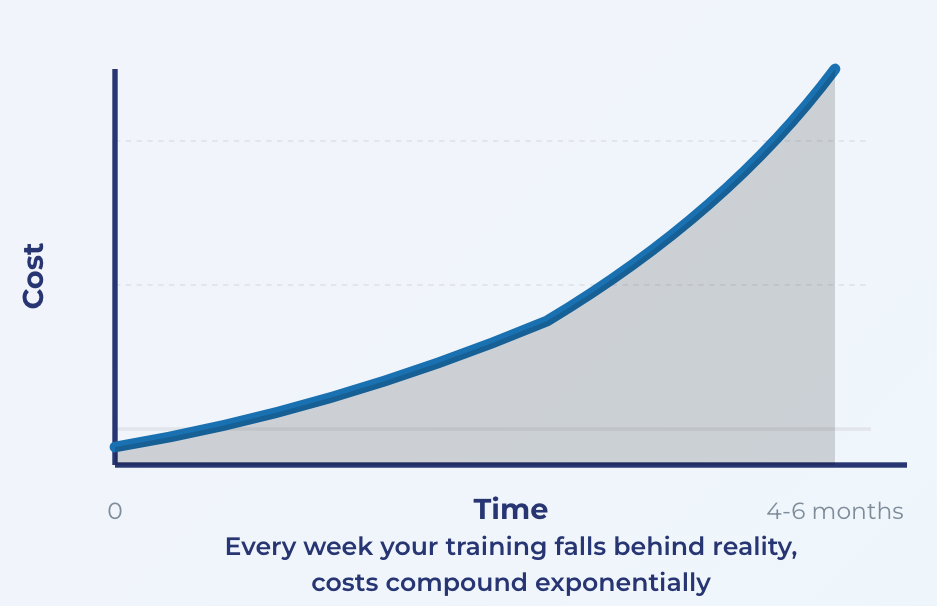
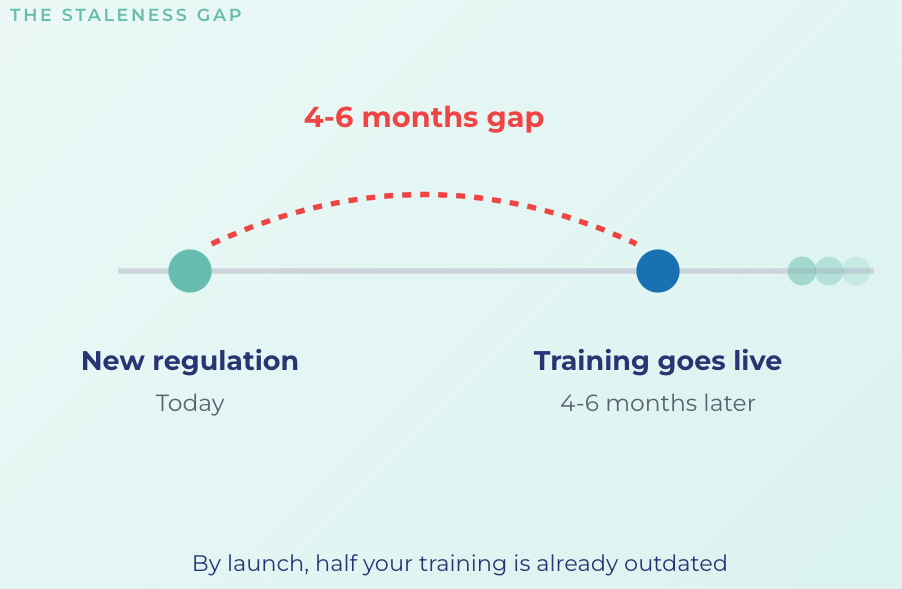
Policy changes. Market shifts. New regulations. But your training always lags by 4–6 months.
By the time your compliance video is final, approved, and deployed, half of it is already outdated.
The cost accumulates quietly. Nobody measures it. But it's there.
How Outdated Training Drains Your Margins
When compliance training doesn't match the current reality, you get four distinct costs bleeding your organization:
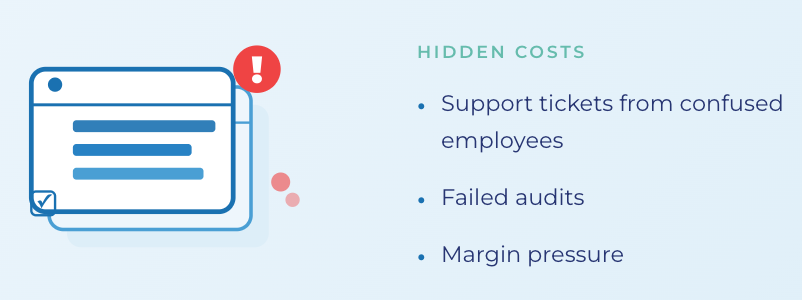
Support Tickets from Confused Employees
Training says one thing. Reality is different. Employees follow the training, get stuck, open tickets. Your support team spends hours clarifying what should have been clear from day one.
Failed Audits and Compliance Risk
Auditors find that employees trained on old procedures. Compliance gaps open up. You're exposed to regulatory risk because your training lagged behind reality.
Disengaged Teams and Churn
Employees stop trusting training because it's wrong. They skip it. Or they waste time re-learning things they already know. Good people leave for companies with clearer onboarding.
Margin Pressure from Operational Mistakes
Employees make mistakes because they were trained on outdated procedures. Rework. Refunds. Customer churn. The cost compounds.
The Root Problem: Your Training Cycle Is Too Slow
Here's how most companies approach compliance training:
Month 1: A policy change is identified. Someone says "we need to train on this."
Months 2–3: Production begins. Script reviews. Stakeholder feedback. Revisions. More reviews.
Months 4–5: Legal and compliance sign off. HR schedules rollout.
Month 6: Training launches. But by now, another policy has changed. The market has shifted. Your training is already behind.
Most companies measure training completion. How many people watched? How many passed the quiz?
Nobody measures staleness. How recent is this training? Does it match what people actually do today?
The Market Is Moving Faster Than Your Training
Regulations change overnight. Product features shift. Market conditions evolve. Your competitive landscape is in constant motion.
But your training cycle is locked in a 6-month rhythm. By design, it will always be behind.
The question isn't: "When can we fit training into our calendar?"
The question is: "How fast can we update training when reality changes?"
When was the last time you updated training because the world changed—not because your annual cycle demanded it?
The Fix: Build for Speed, Not Calendars
The best compliance organizations don't wait for annual reviews. They update training when policy changes, not six months later.
This requires a different approach to how training is built. Modular content. Templated production. Clear governance. The ability to swap one section without reshuffling the entire video.
When training is built as modular components instead of monolithic videos, you can:
Update in days — not months. Policy changes? Update the compliance module. Everything else stays current.
Measure staleness — Know which sections are outdated. Track what's current. Update with intention.
Stop the bleeding — Eliminate support tickets from confusion. Pass audits. Keep teams engaged. Protect margins.
Your Compliance Training Should Match Your Market Speed
Most compliance programs treat training as a once-a-year project. Check the box. Move on.
But your market moves faster than that. Your policies change faster than that. Your employees expect clarity faster than that.
It's time to build training that keeps pace with reality.
Outdated training isn't just a productivity problem. It's a margin problem. It's time to fix it.